
Best Treatment for Acne Scars According to Dermatologists
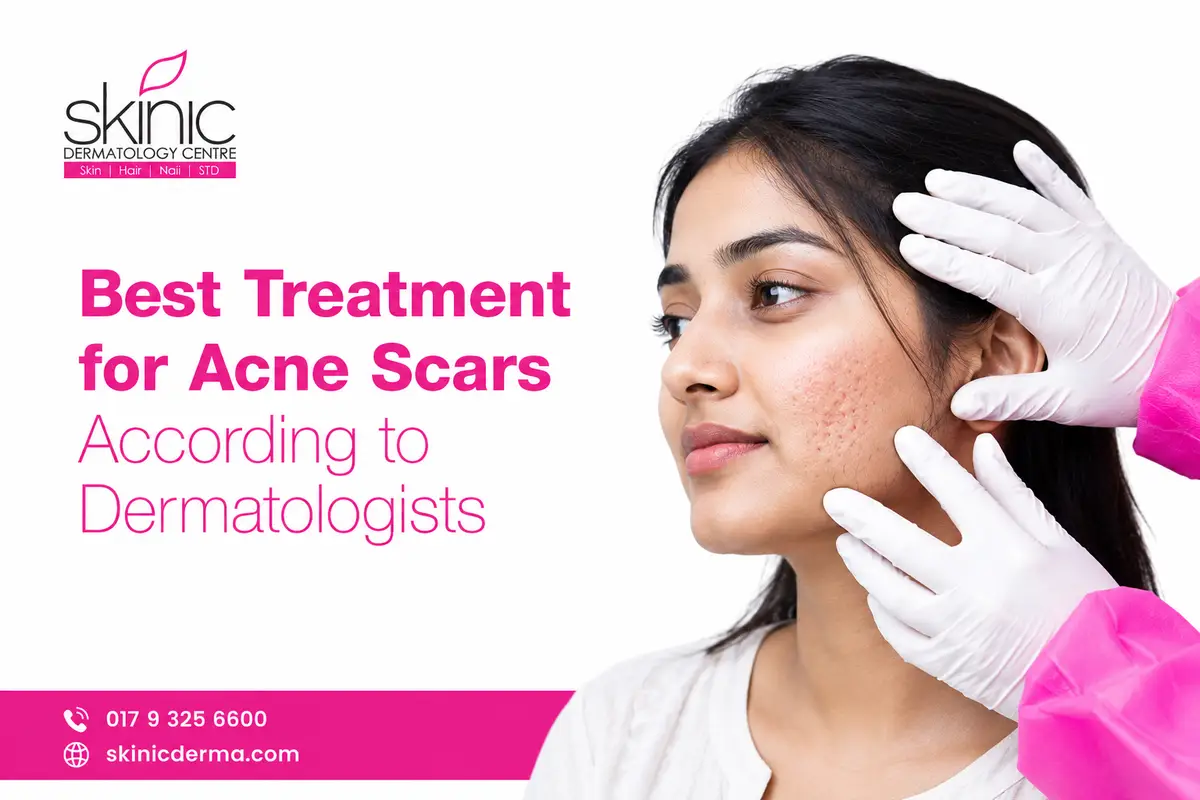
Acne is frustrating enough on its own — but for many people, the real struggle begins after the breakouts clear up. The dark spots, pitted marks, and uneven texture left behind can linger for months or even years, affecting confidence far more than the original pimples ever did.
This is an especially common concern in Bangladesh, where our climate, sun exposure, and skin type make acne scarring both more likely and more visible.
The good news is that acne scars are far more treatable today than most people realize. With the right combination of in-clinic procedures and consistent skincare, most patients see significant, lasting improvement.
In this guide, Dr. Asif Imran Siddiqui of Skinic Dermatology Centre breaks down exactly what causes acne scars, the different types you might be dealing with, and the treatments that actually work.
Why Are Acne Scars So Common in Bangladesh?
Several local factors make Bangladeshi skin particularly prone to visible, stubborn acne scarring:
- Higher melanin content: South Asian skin tends to produce more post-inflammatory hyperpigmentation (dark marks) after acne heals, compared to lighter skin tones.
- Hot, humid climate: Heat and humidity increase oil production and sweating, which can worsen acne breakouts and delay healing.
- Air pollution: Dust and pollution common in cities like Dhaka can clog pores and prolong inflammation.
- Sun exposure: Intense UV exposure without adequate sun protection darkens existing marks and slows their fading.
- Habit of picking or popping pimples: A very common but damaging habit that significantly increases the risk of permanent scarring.
Understanding these factors is important because it means acne scar treatment in Bangladesh often needs to address pigmentation and texture together, not just one or the other.
Schedule an Appointment for Acne Treatment
Types of Acne Scars
Not all acne marks are the same, and effective treatment depends entirely on identifying which type you have.
1. Post-Inflammatory Hyperpigmentation (PIH)
Flat, dark brown or reddish-brown marks left after a pimple heals. These are not true “scars” in the textural sense but are often what people mean by acne scars, and they are extremely common in Bangladeshi skin.
2. Ice Pick Scars
Narrow, deep, pitted scars that look like small puncture marks, usually caused by severe cystic acne.
3. Boxcar Scars
Broader, box-like depressions with defined edges, giving the skin an uneven, pitted appearance.
4. Rolling Scars
Wave-like depressions with sloping edges that create a rolling, uneven skin texture.
5. Atrophic Scarring
General term for scars that sit below the surrounding skin surface due to loss of collagen during the healing process.
6. Hypertrophic or Keloid Scars
Firm, elevated scars that develop when the healing skin lays down excess collagen. They occur less frequently than other scar types but tend to appear more often on areas such as the chest and back.
A proper skin examination is essential to correctly identify which type(s) you have, since a rolling scar and a dark mark require completely different treatment approaches.
Dermatologist-Recommended Treatments for Acne Scars
1. Fractional CO₂ Laser
Fractional CO₂ resurfacing delivers laser energy to the skin in a pattern of tiny, evenly spaced columns, prompting the deeper skin layers to ramp up collagen production as part of the natural healing process.
It’s one of the most effective options for boxcar and rolling scars, though settings must be carefully calibrated for South Asian skin to reduce the risk of post-treatment pigmentation.
2. Subcision
A targeted procedure to release the fibrous bands beneath rolling and some boxcar scars that pull the skin down, allowing the depressed scar to lift and blend more naturally with surrounding skin.
Subcision is often combined with other resurfacing treatments for a more complete result.
3. Chemical Peel
Medical-grade chemical peels (using agents like glycolic acid, salicylic acid, or TCA) exfoliate the top layers of skin, helping fade pigmentation and improve mild textural scarring over a series of sessions.
4. CO₂ Laser
This treatment works by precisely ablating the outermost, scar-affected layers of skin, prompting the body to generate new collagen as it rebuilds, which gradually leaves the surface looking smoother and more uniform in tone.
It’s typically reserved for more pronounced scarring and requires proper downtime and aftercare.
5. TCA CROSS
A specialized technique where a high-concentration TCA (trichloroacetic acid) solution is applied precisely into individual ice pick scars, encouraging the skin to rebuild collagen and gradually raise the base of the scar.
This is one of the most targeted treatments available for deep, narrow ice pick scars.
6. Carbon Laser (Carbon Peel)
Carbon laser treatment involves applying a thin layer of carbon paste to the skin, which is then targeted with laser energy to exfoliate the surface, reduce oiliness, minimize pore size, and gently improve tone and texture — a comfortable option often used alongside other scar treatments.
7. Skin Booster
Injectable skin boosters deliver hyaluronic acid and other skin-nourishing components directly into the skin, improving hydration, elasticity, and overall texture.
While not a direct scar-removal treatment, skin boosters help create a healthier skin base that supports and enhances the results of other procedures.
8. Oral Medications
In cases where active or hormonal acne continues to trigger new scarring, dermatologist-prescribed oral medications may be used to bring breakouts under control first. Treating active acne is often a necessary step before scar-focused procedures can deliver their best results.
Most patients get the best results from a combination treatment plan — for example, subcision paired with Fractional CO₂ for texture, TCA CROSS for isolated ice pick scars, and skin boosters to support overall skin health — tailored to their specific scar types and skin tone.
How Acne Scars Are Diagnosed at Skinic Dermatology Centre
When you visit Dr. Asif Imran Siddiqui for acne scar treatment, your evaluation typically includes:
- A detailed skin history, including acne severity, duration, and previous treatments tried
- Close visual and tactile examination to classify scar type(s) — pigmentation, ice pick, boxcar, rolling, or a mix
- Assessment of active acne, since ongoing breakouts should be controlled before intensive scar treatment begins
- A personalized treatment roadmap, since most visible improvement comes from a series of sessions over several months rather than a single procedure
Schedule an Appointment for Acne Scar Treatment
Common Myths About Acne Scar Treatment
- “Scars fade completely on their own” — Pigmentation may lighten somewhat over time, but textural scars like ice pick or boxcar scars generally do not resolve without treatment.
- “Home remedies like lemon juice or toothpaste fade scars” — These can irritate the skin and worsen pigmentation, especially in sun-exposed, humid climates like Bangladesh.
- “One laser session will remove all scars” — Most effective treatments require multiple sessions spaced weeks apart for gradual, safe improvement.
- “Darker skin tones can’t get laser treatment” — With the right settings and an experienced dermatologist, several laser and light-based treatments can be used safely on Bangladeshi skin tones.
Why Choose Skinic Dermatology Centre for Acne Scar Treatment
At Skinic Dermatology Centre, Dr. Asif Imran Siddiqui takes a tailored approach to acne scar treatment, recognizing that South Asian skin requires specific considerations around pigmentation risk, sun exposure, and skin healing.
Every treatment plan begins by first pinpointing the exact type of scarring you have, followed by a customized combination of in-clinic procedures and supportive skincare designed to deliver visible, lasting results.
Final Thoughts
Acne scars don’t have to be permanent. With an accurate diagnosis and the right combination of dermatologist-guided treatments, most people see real, visible improvement in both skin texture and pigmentation — often within just a few months of starting treatment.
If acne scars are affecting your confidence, book a consultation with Dr. Asif Imran Siddiqui at Skinic Dermatology Centre to get a treatment plan built specifically around your skin type and scar pattern.
Frequently Asked Questions
1. How many sessions are needed to treat acne scars?
Every patient’s treatment plan looks a little different — the total number of sessions typically comes down to how severe the scarring is, which type of scars are present, and how well the individual’s skin responds along the way.
2. Can acne scars be removed completely?
Significant improvement is achievable for most patients, though “complete removal” isn’t always realistic for deep textural scars. The goal is a smoother, more even skin appearance.
3. Is it necessary to treat active acne before scar treatment?
Yes — treating active breakouts first is important, since new acne can create new scars while old ones are still being treated.
4. Are acne scar treatments painful?
Most procedures involve mild, temporary discomfort, often reduced with topical numbing cream before treatment.
5. How long before I see visible results?
Depending on the treatment, initial improvement is often visible within 4 to 8 weeks, with continued improvement over several months as collagen remodeling continues.
Book Your Appointment
Appointment will be confirmed over phone as per the available time slot of our consultant.