
Why Men in Bangladesh Lose Hair Early: Causes, Warning Signs & What You Can Do
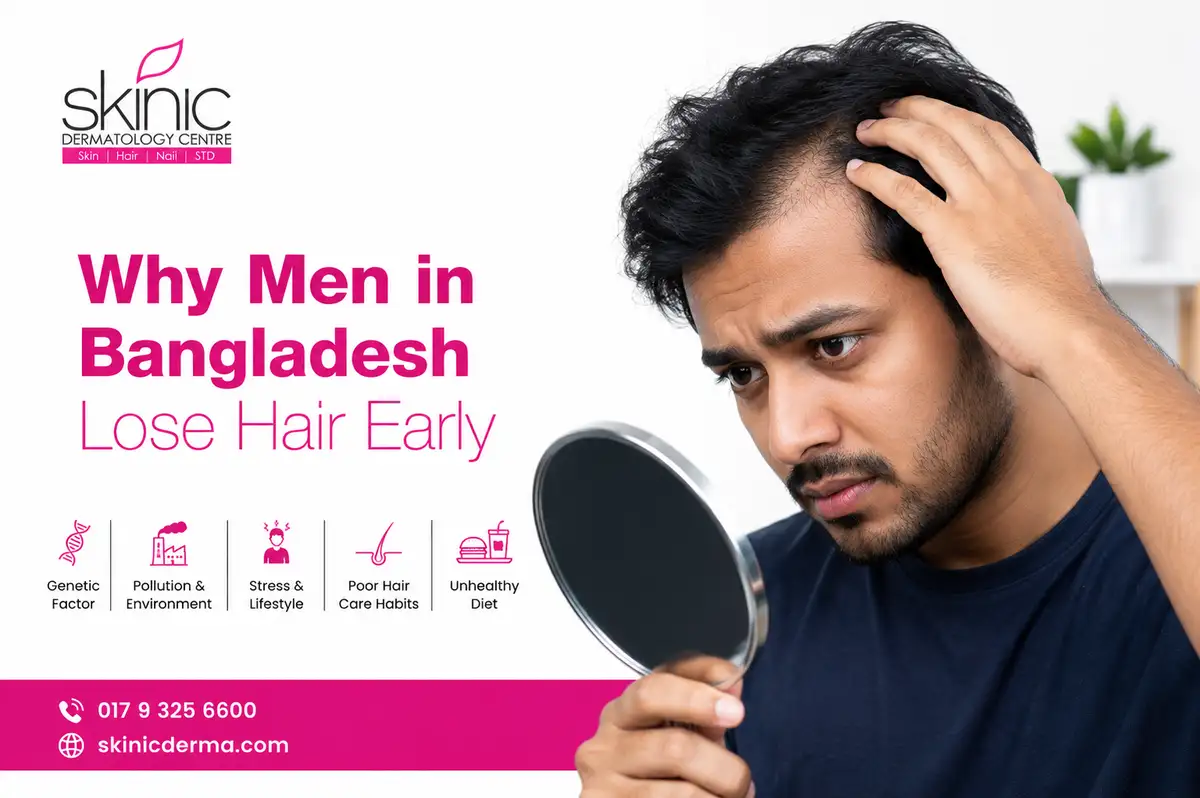
Noticing a receding hairline in your early 20s? Seeing more scalp around your crown than you did a year ago? Or finding more hair on your pillow, towel, or bathroom floor?
You are not alone.
Early hair loss has become a common concern among men in Bangladesh, particularly among young adults in their 20s and 30s. For some men, it begins with a slightly higher hairline. For others, the first sign is thinning around the crown or excessive shedding while showering.
But why do some men start losing hair so early?
The answer is usually more complicated than blaming Dhaka’s water, pollution, stress, shampoo, or wearing a helmet. Male hair loss can have several causes, and identifying the actual reason is essential before choosing a treatment.
In this guide, we explain the major causes of early hair loss in Bangladeshi men, the warning signs you should not ignore, and the treatment options that may help preserve your existing hair.
Is Hair Loss Common Among Men in Their 20s?
Male pattern hair loss can begin surprisingly early.
For genetically susceptible men, the process may start during the late teens or early twenties. It usually progresses gradually, beginning with a receding hairline, thinning at the temples, or loss of density around the crown.
The medical name for this condition is androgenetic alopecia, commonly known as male pattern baldness.
It is also important to distinguish actual hair loss from temporary hair shedding. Losing some hair every day is part of the normal hair-growth cycle.
A noticeable increase in shedding, however, can sometimes indicate stress, illness, nutritional problems, scalp disease, or another underlying condition.
Schedule an Appointment for Hair Treatment
Why Do Bangladeshi Men Lose Hair Early?
There isn’t one single reason.
In many patients, genetics are the main factor, while lifestyle, health, nutrition, and scalp problems may accelerate thinning or trigger additional shedding.
Here are some of the most important causes.
1. Genetics and Male Pattern Baldness
Male pattern baldness, medically referred to as androgenetic alopecia, is the primary reason many men experience ongoing hair loss.
If your father, brothers, maternal relatives, or other family members developed thinning or baldness at a relatively young age, your own risk may be higher.
In genetically susceptible men, hair follicles become sensitive to a hormone called dihydrotestosterone (DHT).
Over time, this sensitivity causes affected follicles to become progressively smaller—a process known as follicular miniaturization.
The hair produced by these follicles becomes:
- Shorter
- Finer
- Weaker
- Less visible
Eventually, some follicles may stop producing noticeable hair.
Typical signs include:
- Receding temples
- An M-shaped hairline
- Thinning around the crown
- Gradual loss of density on top of the scalp
The sides and back of the scalp are usually affected much less.
Why Early Treatment Matters
Male pattern hair loss normally progresses slowly.
Treatment is generally more effective when started while follicles are still active. Waiting until an area has been completely bald for years can make meaningful regrowth more difficult.
That is why men noticing a changing hairline in their 20s should not automatically assume they are “too young” to see a dermatologist.
2. Stress and the Fast-Paced Dhaka Lifestyle
Long working hours, university pressure, business responsibilities, traffic congestion, financial worries, irregular schedules, and inadequate sleep are familiar parts of life for many people in Dhaka.
Significant physical or psychological stress can sometimes trigger excessive shedding called telogen effluvium.
Unlike classic male pattern baldness, telogen effluvium often causes more widespread shedding across the scalp.
Interestingly, the hair loss may not begin immediately.
A person may experience an illness, severe stress, major weight loss, surgery, or another physical shock and notice excessive shedding several weeks or months later.
Stress-related shedding can improve once the underlying trigger is resolved, but persistent shedding should still be evaluated professionally.
3. Poor Nutrition and Nutritional Deficiencies
Hair follicles are metabolically active and require adequate nutrition.
Extreme dieting, very low-calorie diets, inadequate protein intake, irregular meals, or certain nutritional deficiencies can contribute to hair shedding.
Depending on a person’s medical history, a dermatologist may investigate nutrients such as:
- Iron or ferritin
- Vitamin D
- Vitamin B12
- Zinc
- Protein and overall nutritional status
However, taking random “hair vitamins” is not necessarily the solution.
Supplements are most useful when an actual deficiency is identified. Taking excessive amounts of certain vitamins and minerals may lead to adverse health effects.
So instead of buying multiple supplements after seeing an advertisement on Facebook or YouTube, it is better to determine whether you actually have a deficiency.
4. Dandruff and Other Scalp Problems
Bangladesh’s hot and humid climate can make scalp problems particularly uncomfortable.
Sweating, excess oil, dandruff and existing inflammatory scalp conditions may cause:
- Itching
- Flaking
- Redness
- Irritation
- Hair breakage or shedding
Scalp conditions, including seborrheic dermatitis, psoriasis, and fungal infections, can also contribute to poor scalp health.
Treating the scalp condition does not cure genetic male pattern baldness, but maintaining a healthy scalp is an important part of managing overall hair and scalp health.
If you have severe dandruff, painful areas, pus, crusting, persistent itching or noticeable patches of hair loss, consult a dermatologist rather than repeatedly changing shampoos.
5. Air Pollution, Dust and Daily Exposure
Anyone who regularly travels around Dhaka understands how much dust and pollution can accumulate on the skin and hair.
Pollutants may contribute to scalp irritation and oxidative stress, particularly in people with sensitive or inflammatory scalp conditions.
However, pollution should not be confused with the underlying mechanism of genetic male pattern baldness.
If you have inherited androgenetic alopecia, simply washing your scalp more frequently or changing shampoo will not stop the hormonal and genetic process occurring inside the follicles.
Good scalp hygiene can help maintain scalp health, but an accurate diagnosis is still necessary.
6. What About Hard Water in Dhaka?
Hard water is frequently blamed for hair loss in Bangladesh.
Mineral-rich water may leave deposits on the hair, making some people’s hair feel rough, dry, tangled or difficult to manage. This can potentially increase hair-shaft breakage.
However, hard water should not automatically be blamed for a receding hairline or crown baldness.
If your hairline is moving backwards in a recognizable pattern, genetics and androgen sensitivity are more likely explanations.
This distinction is important because otherwise someone may spend months changing water filters while male pattern hair loss continues to progress.
7. Lack of Sleep and an Unhealthy Lifestyle
Sleep alone does not determine whether someone will become bald.
But consistently poor sleep often comes together with stress, poor nutrition, smoking, inactivity and irregular routines—all of which can affect overall health.
For healthier hair and general well-being, try to maintain:
- A regular sleep schedule
- Adequate protein intake
- Fruits and vegetables
- Regular physical activity
- Proper hydration
- Stress management
- Reduced or no smoking
Lifestyle improvement can support healthy hair growth, but it cannot completely override a strong genetic tendency toward male pattern baldness.
8. Crash Dieting and Rapid Weight Loss
Trying to lose a large amount of weight very quickly can sometimes affect the hair-growth cycle.
Severe calorie restriction or insufficient protein and micronutrient intake may trigger excessive shedding several weeks or months later.
This is particularly relevant for young men following highly restrictive diets without professional nutritional guidance.
Gradual, nutritionally balanced weight management is much safer for your overall health.
9. Thyroid Problems and Other Medical Conditions
Not every case of hair loss in men is genetic.
Thyroid disease and certain other medical conditions can contribute to diffuse thinning or increased shedding.
Some medications may also affect the hair-growth cycle.
This is one reason why copying another person’s hair-loss treatment is a bad idea.
Two men of the same age can appear to have similar hair fall but have completely different underlying causes.
10. Alopecia Areata
If you suddenly notice one or several smooth, round bald patches, you may not have ordinary male pattern baldness.
Alopecia areata is another possible reason for hair loss, occurring when the immune system mistakenly attacks healthy hair follicles and disrupts normal hair growth.
It can affect:
- Scalp hair
- Beard
- Eyebrows
- Eyelashes
- Other body hair
Sudden patchy hair loss deserves medical evaluation rather than home remedies.
11. Harsh Hair Treatments and Improper Hair Care
Frequent bleaching, chemical straightening, excessive heat and aggressive styling can damage the hair shaft.
Repeated damage may make hair:
- Brittle
- Dry
- Frizzy
- Easier to break
Pulling hairstyles can also place unnecessary tension on hair follicles.
Men should therefore differentiate between hair breakage and hair loss from the follicle, because the treatment is different.
Schedule an Appointment for Hair Treatment
Common Hair-Loss Myths Among Bangladeshi Men
Hair loss attracts a huge number of myths.
“Wearing a helmet makes you bald.”
A properly fitting motorcycle helmet does not normally cause male pattern baldness. Genetics and DHT sensitivity remain much more important.
Keeping the helmet liner and scalp clean is sensible, especially if you sweat heavily.
“Shaving my head will make my hair grow thicker.”
Shaving changes how the hair looks and feels above the skin.
It does not increase the number of hair follicles underneath your scalp.
“Hair oil can cure baldness.”
Oil may moisturize the hair and scalp and reduce dryness, depending on the product.
But oil cannot reverse the genetic process responsible for androgenetic alopecia.
“Changing shampoo will stop my receding hairline.”
A suitable shampoo can help manage oil, dandruff or other scalp problems.
It cannot generally stop genetically driven follicular miniaturization.
Early Warning Signs You Should Watch For
Look at photographs of yourself from one or two years ago and compare your hairline and density.
Possible early signs include:
- Hairline gradually moving backwards
- Increased visibility of the temples
- M-shaped hairline
- Thinning around the crown
- Scalp becoming more visible under bright light
- Hair strands becoming progressively finer
- Noticeably reduced density
- Persistent excessive shedding
You should seek medical advice sooner if hair loss is:
- Sudden
- Patchy
- Associated with severe itching or inflammation
- Accompanied by scalp pain
- Affecting your beard or eyebrows
- Occurring after significant illness or weight loss
How Is Male Hair Loss Diagnosed?
A good hair-loss treatment plan begins with diagnosis—not with a procedure.
At Skinic Dermatology Centre, evaluation may include a detailed assessment of the patient’s hair-loss pattern, scalp, medical history, family history, diet, lifestyle and other possible contributing factors.
Depending on the case, further investigations may be recommended.
Medical History
Your dermatologist may ask:
- When did the hair fall begin?
- Does baldness run in your family?
- Have you recently been ill?
- Are you taking any medications?
- Have you recently lost weight?
- How stressful is your lifestyle?
- What products do you use on your hair?
- Has the shedding been gradual or sudden?
Scalp Examination
The distribution of thinning provides important clues.
Male pattern baldness, alopecia areata, scalp infection and diffuse shedding can have very different appearances.
Scalp or Hair Analysis
Magnified scalp examination or trichoscopy can help dermatologists evaluate hair density, follicular miniaturization and scalp abnormalities.
Blood Tests When Necessary
If the history or examination suggests an underlying problem, your doctor may recommend appropriate laboratory investigations.
Not every patient requires the same tests.
Can Early Hair Loss Be Treated?
In many cases, yes—but the treatment depends on the diagnosis.
The goal may be to:
- Reduce further hair loss
- Preserve existing follicles
- Improve hair thickness
- Encourage regrowth where follicles remain viable
- Treat associated scalp or medical conditions
Treatment results vary between individuals.
Schedule an Appointment for Hair Treatment
Medical Treatment for Male Pattern Hair Loss
Dermatologists may use established medical treatments for androgenetic alopecia depending on the patient’s age, health, hair-loss pattern and other factors.
These can include topical or oral medications.
Medicines used for male pattern hair loss can have contraindications and potential side effects, so they should be discussed with a qualified physician rather than started solely from advice found on social media.
PRP Hair Treatment
Platelet-Rich Plasma (PRP) therapy uses a concentrated component prepared from the patient’s own blood.
The prepared plasma is introduced into selected areas of the scalp as part of a regenerative hair-restoration approach.
PRP may be used for suitable patients with certain forms or stages of hair thinning, often alongside other treatments rather than as a universal replacement for medical therapy.
Skinic Dermatology Centre provides PRP hair treatment as part of its hair-restoration services in Dhaka.
GFC Hair Treatment
Growth Factor Concentrate (GFC) is another regenerative approach available at Skinic Dermatology Centre.
It uses concentrated growth factors prepared from the patient’s blood and is used in selected hair-restoration treatment plans.
Whether PRP, GFC, medication, or another approach is appropriate should depend on your diagnosis and stage of hair loss.
Hair Exosome Treatment
Hair exosome treatment is an emerging option for men experiencing hair loss. It uses growth-factor-rich exosomes to support hair follicle activity and may help improve hair density and overall scalp health.
In Bangladesh, this advanced treatment is increasingly considered for men seeking a non-surgical approach to managing hair thinning and hair loss.
Mesotherapy and Additional Hair Treatments
Skinic Dermatology Centre also provides mesotherapy and other personalized hair-restoration approaches.
Rather than performing the same procedure on everyone, the aim should be to understand why the individual is losing hair first and then create an appropriate treatment plan.
Treating Dandruff and Scalp Disease
If inflammation, dandruff, fungal infection or another scalp disorder is contributing to shedding, treating that condition becomes an important part of the overall plan.
A dermatologist may recommend medicated scalp products or prescription treatment depending on the diagnosis.
Correcting Nutritional Deficiencies
If blood investigations confirm a relevant deficiency, your doctor may recommend dietary changes or targeted supplementation.
Avoid assuming that more supplements automatically mean more hair.
Correcting a genuine deficiency is very different from taking unnecessary high doses of vitamins.
When Should You Visit a Dermatologist?
Consider making an appointment if:
- Your hairline is noticeably receding
- Your crown is becoming thinner
- Hair loss started in your early 20s
- You are shedding significantly more hair than before
- You have circular bald patches
- Your scalp is persistently itchy, painful or inflamed
- Hair loss continues for several months
- Hair loss is affecting your confidence
The earlier progressive male pattern hair loss is identified, the more opportunity there may be to preserve existing hair.
Hair Loss Is Not the Same for Every Man
This is perhaps the most important point.
Your friend’s treatment may not be your treatment.
Your brother’s hair loss may not have the same cause as yours.
One man may have primarily genetic male pattern baldness. Another may have temporary stress-related shedding. Someone else may have a scalp condition, nutritional deficiency, thyroid problem or alopecia areata.
That is why diagnosis comes first.
Looking for Hair Fall Treatment for Men in Dhaka?
If you are noticing early thinning, a receding hairline or excessive hair shedding, Skinic Dermatology Centre provides professional evaluation and personalized hair-restoration treatment in Dhaka.
Under the guidance of Dr. Asif Imran Siddiqui, Skinic Dermatology Centre offers individualized hair and scalp assessment along with treatment options such as PRP, GFC, mesotherapy and medical hair-loss management according to the patient’s condition.
Instead of waiting until significant hair has been lost, consider getting your scalp and hair-loss pattern evaluated at an early stage.
Final Thoughts
Losing hair early can be frustrating, particularly when it begins in your 20s or early 30s. But buying random oils, supplements, serums or treatments without knowing the cause can waste valuable time.
For many men, genetics and male pattern baldness are the main explanation. Stress, nutrition, scalp health, illness and lifestyle may also contribute to excessive shedding or make an existing hair problem more noticeable.
The most useful first step is therefore simple:
Find out why you are losing hair.
Once the cause and stage of hair loss are understood, your dermatologist can recommend an appropriate plan for protecting your existing hair and improving scalp and hair health.
Frequently Asked Questions About Early Hair Loss in Bangladeshi Men
1. Why am I losing hair at 22 or 25?
Male pattern hair loss can begin during the late teens or early twenties in genetically susceptible men. Stress, illness, nutritional problems and other conditions can also cause excessive shedding, so an examination is useful if the loss is noticeable or persistent.
2. What is the most common cause of early baldness in men?
Male pattern baldness, medically known as androgenetic alopecia, is the leading cause of hair loss in men. Genetics and sensitivity of the hair follicles to androgens, particularly DHT, play major roles.
3. Can lost hair grow back?
It depends on why the hair was lost and how long the follicles have been affected. Temporary shedding can often recover after the cause is corrected. Early male pattern hair loss may also respond better to treatment than long-standing bald areas.
4. Does Dhaka’s water cause male baldness?
Water quality can affect the feel and condition of the hair shaft, but it should not automatically be blamed for a typical receding hairline or crown baldness. Genetic male pattern hair loss has a different underlying mechanism.
5. Does stress cause permanent baldness?
Stress can trigger significant temporary shedding in some people. However, stress and genetic male pattern baldness are different processes and can also occur at the same time.
6. Can hair oil stop male pattern baldness?
Hair oils can condition the hair or scalp but are not a proven treatment for the genetic and hormonal mechanism behind male pattern baldness.
7. What type of doctor should I see for hair loss?
Dermatologists are medical specialists who diagnose and manage conditions affecting the skin, scalp, hair, and nails. A proper diagnosis can help determine whether your hair loss is genetic, inflammatory, autoimmune, nutritional, medical or related to another cause.
Book Your Appointment
Appointment will be confirmed over phone as per the available time slot of our consultant.