
What Causes Acne in Humid Weather Like Bangladesh?
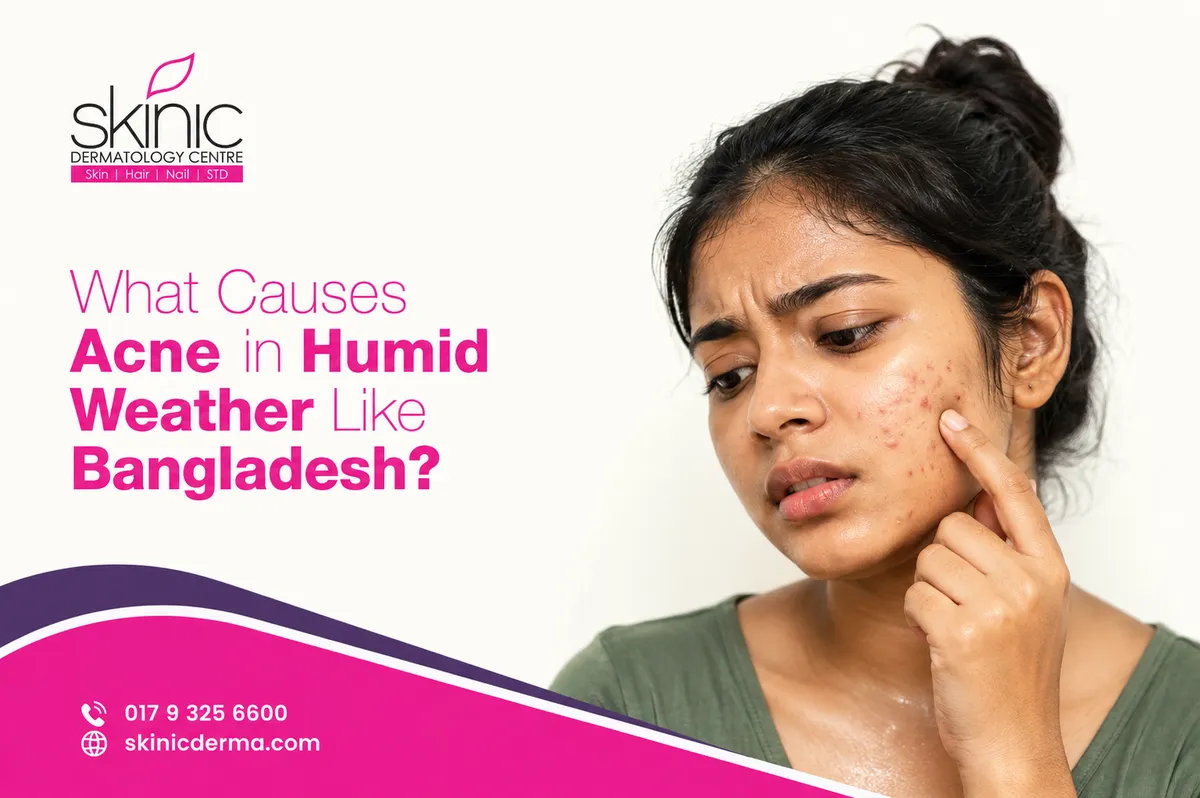
If you live in Bangladesh — Dhaka, Chittagong, Sylhet, or anywhere across this beautiful delta — you already know what it feels like to step outside and immediately feel your skin turn greasy. You feel the heat the moment you step outside. Then the air feels thick and wet, like it is pressing against your skin.
And if you’re one of the millions of Bangladeshis struggling with stubborn breakouts, you’ve probably wondered: Why does my skin keep breaking out no matter what I do?
The answer, more often than not, starts with the weather.
In this guide, we break down exactly what causes acne in humid climates like Bangladesh, why your skin behaves differently here compared to drier countries, and what you can do to finally take control.
Understanding Acne: The Basics
Before we dive into the climate connection, let’s understand what acne actually is.
Acne is a long-term skin problem that happens when the tiny pores in your skin get blocked by natural skin oil, dead skin cells, and germs. The result? Whiteheads, blackheads, papules, pustules, nodules, or cysts — depending on the severity.
Acne is not just a “teenage problem.” In Bangladesh, dermatologists at clinics like Skinic Dermatology Centre routinely see adult acne in patients well into their 30s, 40s, and even 50s. And the tropical climate plays a massive role in this.
How Humid Weather Directly Causes and Worsens Acne
1. Excess Sebum Production in the Heat
Your skin has sebaceous (oil) glands attached to every hair follicle. In high temperatures, these glands become hyperactive. They produce more sebum — the skin’s natural oil — as part of the body’s cooling mechanism.
In a country where temperatures regularly soar above 35–40°C with humidity levels exceeding 80% (especially during the pre-monsoon and monsoon seasons), your skin is essentially in constant oil-overproduction mode.
This excess sebum doesn’t just sit on the skin; it mixes with dead skin cells and clogs your pores, creating the perfect environment for acne-causing bacteria like Cutibacterium acnes (formerly Propionibacterium acnes) to thrive.
The result: More frequent breakouts, larger pores, and oilier skin throughout the day — even after washing your face.
2. Sweat + Oil = A Recipe for Clogged Pores
In Bangladesh’s humid climate, sweating is unavoidable. When sweat mixes with sebum and environmental pollutants on the skin’s surface, it creates a thick, sticky film. This film doesn’t just sit harmlessly; it actively traps debris inside your pores.
Regular commuting through Dhaka’s traffic — with air pollution, dust, and vehicle exhaust — means your skin is constantly exposed to particulate matter. These tiny particles settle into already-enlarged pores, further contributing to blockages and inflammation.
3. Fungal Acne (Malassezia Folliculitis) — A Tropical Skin Problem
Here’s something many Bangladeshis don’t know: not all “acne” is the same.
In humid, tropical climates, a condition called fungal acne (Malassezia folliculitis) is extremely common. It looks almost identical to regular acne — small, uniform bumps, usually on the forehead, chest, and back — but it’s caused by an overgrowth of a naturally occurring yeast called Malassezia on the skin.
This yeast loves hot, moist environments. When you sweat heavily and your clothes trap moisture against your skin (especially during Eid celebrations, weddings, or long outdoor events), Malassezia multiplies rapidly, causing an itchy, acne-like rash.
Why this matters: Fungal acne does NOT respond to standard acne treatments. If you’ve been using benzoyl peroxide or salicylic acid for months with no improvement, fungal acne could be the culprit. A dermatologist can accurately diagnose this with a simple clinical examination.
💡 Are you struggling with persistent breakouts that don’t respond to over-the-counter products? Book a consultation with Dr. Asif Imran Siddiqui at Skinic Dermatology Centre for an accurate diagnosis and personalized treatment plan.
Read Also: A Complete Guide to Acne Treatment
Schedule an Appointment for Botox Treatment
4. High Humidity Disrupts Your Skin Barrier
Paradoxically, high humidity doesn’t mean your skin is well-hydrated. In fact, excessive humidity can disrupt the skin’s natural barrier function.
When the air is saturated with moisture, sweat cannot evaporate efficiently from the skin. This creates a constant state of “wet skin” that weakens the protective lipid layer of your epidermis.
A compromised skin barrier means:
- More vulnerability to bacterial invasion
- Increased inflammation
- Heightened sensitivity to skincare products
- Greater tendency for post-inflammatory hyperpigmentation (dark marks left after pimples heal)
This last point is especially relevant for South Asian skin tones, which are naturally more prone to hyperpigmentation.
5. Air Conditioning Creates a Vicious Cycle
Many Bangladeshis spend significant time indoors under air conditioning — offices, shopping malls, universities, and homes. Moving constantly between extreme humidity outdoors and cold, dry air-conditioned environments confuses your skin.
When your skin is repeatedly exposed to dry AC air, it compensates by producing even more oil. This “reactive sebum overproduction” means your skin is simultaneously dehydrated and oily — a frustrating combination that feeds the acne cycle.
Other Key Acne Causes Relevant to Bangladeshis
Dietary Habits
Bangladeshi cuisine, while delicious, includes ingredients that may aggravate acne in some individuals:
- High glycaemic foods: White rice, maida (refined flour) in paratha, naan, and sweets like mishti doi and rasgolla spike blood sugar quickly. High glycaemic foods increase insulin-like growth factor 1 (IGF-1), which stimulates excess sebum production.
- Dairy: Studies suggest that dairy consumption — especially milk — can worsen acne in acne-prone individuals due to hormone content.
- Spicy and oily foods: While the direct link between spicy food and acne is still debated, excess oil in the diet can contribute to systemic inflammation, which worsens existing acne.
Hormonal Imbalances
Hormonal acne is extremely common in Bangladesh, particularly among:
- Teenage boys and girls going through puberty
- Women with PCOS (Polycystic Ovary Syndrome) — a condition highly prevalent in Bangladeshi women, often presenting with jawline and chin acne, irregular periods, and weight gain
- Pregnant and postpartum women whose hormone levels fluctuate dramatically
- Adults under chronic stress, as cortisol (the stress hormone) directly stimulates sebaceous glands
Inadequate or Incorrect Skincare
Ironically, using the wrong skincare products can make acne significantly worse:
- Heavy, oil-based moisturizers and creams clog pores in humid weather
- Over-washing strips the skin of natural oils, causing rebound sebum overproduction
- Using whitening creams without dermatologist guidance (a very common habit in Bangladesh) — many fairness creams contain comedogenic ingredients and even harmful substances like mercury or steroids that worsen acne and cause other skin problems
- Not changing pillowcases frequently — sweat, hair products, and oil transfer onto your pillow every night, reapplying bacteria to your face
Stress and Lifestyle
The fast-paced lifestyle of urban Bangladesh — exam pressure, work stress, long commutes, irregular sleep — triggers cortisol release, which in turn signals the skin to produce more oil.
Poor sleep also impairs the skin’s nighttime repair process, slowing healing of active acne and increasing the likelihood of post-acne dark spots.
Schedule an Appointment for Botox Treatment
When to See a Dermatologist
Home care and over-the-counter products can manage mild acne. But you should see a dermatologist if:
- Your acne is serious — with deep, painful lumps and swollen sores
- You have persistent breakouts lasting more than 8–12 weeks despite home treatment
- You’re developing dark spots or scarring from acne
- You suspect hormonal acne (especially with PCOS symptoms)
- You have melasma or other pigmentation concerns alongside acne
- You’re pregnant or breastfeeding and need safe treatment options
Early treatment prevents scarring — and acne scars are far harder to treat than the acne itself.
Why Choose Skinic Dermatology Centre?
At Skinic Dermatology Centre, we understand that Bangladeshi skin has unique needs. Our lead dermatologist, Dr. Asif Imran Siddiqui, combines international training with deep local clinical experience to offer treatments specifically tailored for South Asian skin types and Bangladesh’s tropical climate.
Our services include:
- Comprehensive acne diagnosis and management
- Hormonal acne evaluation
- Melasma and pigmentation treatment (topical, chemical peel, and laser options)
- Anti-acne facial and skin rejuvenation treatments
- Personalized skincare prescription
We believe every patient deserves clear skin — and a treatment plan that actually works for their skin, their budget, and their lifestyle.
Final Thoughts
Living in Bangladesh means your skin faces one of the toughest climates in the world — intense heat, relentless humidity, UV radiation, pollution, and dust, all year round. It’s no surprise that acne and melasma are among the most common skin problems across the country.
But here’s the good news: with the right knowledge and the right medical support, clear skin is absolutely achievable — even in Dhaka’s humidity.
Understand your skin. Protect it from the sun. Avoid the trap of unregulated whitening creams. And when in doubt, see a qualified dermatologist.
Frequently Asked Questions (FAQs)
1. Does humidity directly cause acne?
Humidity itself doesn’t cause acne, but it creates the ideal conditions for it — by increasing sweat, sebum production, and bacterial growth on the skin.
2. What is melasma and is it the same as acne marks?
Melasma is a pigmentation disorder caused by melanin overproduction, triggered by sun exposure and hormones.
3. What is the best treatment for melasma on face in Bangladesh?
A combination of strict sun protection (SPF 50+), prescribed topical agents (hydroquinone, tretinoin, or alternatives), and professional treatments like chemical peels or lasers — all customized by a qualified dermatologist.
4. Can I use home remedies like lemon juice or turmeric for melasma?
Lemon juice can irritate and photosensitize the skin, making melasma worse. While turmeric has mild antioxidant properties, it’s not effective as a standalone melasma treatment. Always consult an expert dermatologist before trying home remedies.
5. How long does it take to reduce melasma?
With proper treatment and consistent sun protection, noticeable improvement is usually seen in 8–12 weeks. Complete clearance may take longer, and maintenance is required to prevent recurrence.
6. Is acne treatment safe during pregnancy?
Many standard acne treatments are not safe during pregnancy. A dermatologist can guide you on safe options like topical azelaic acid and certain glycolic acid products.
Book Your Appointment
Appointment will be confirmed over phone as per the available time slot of our consultant.